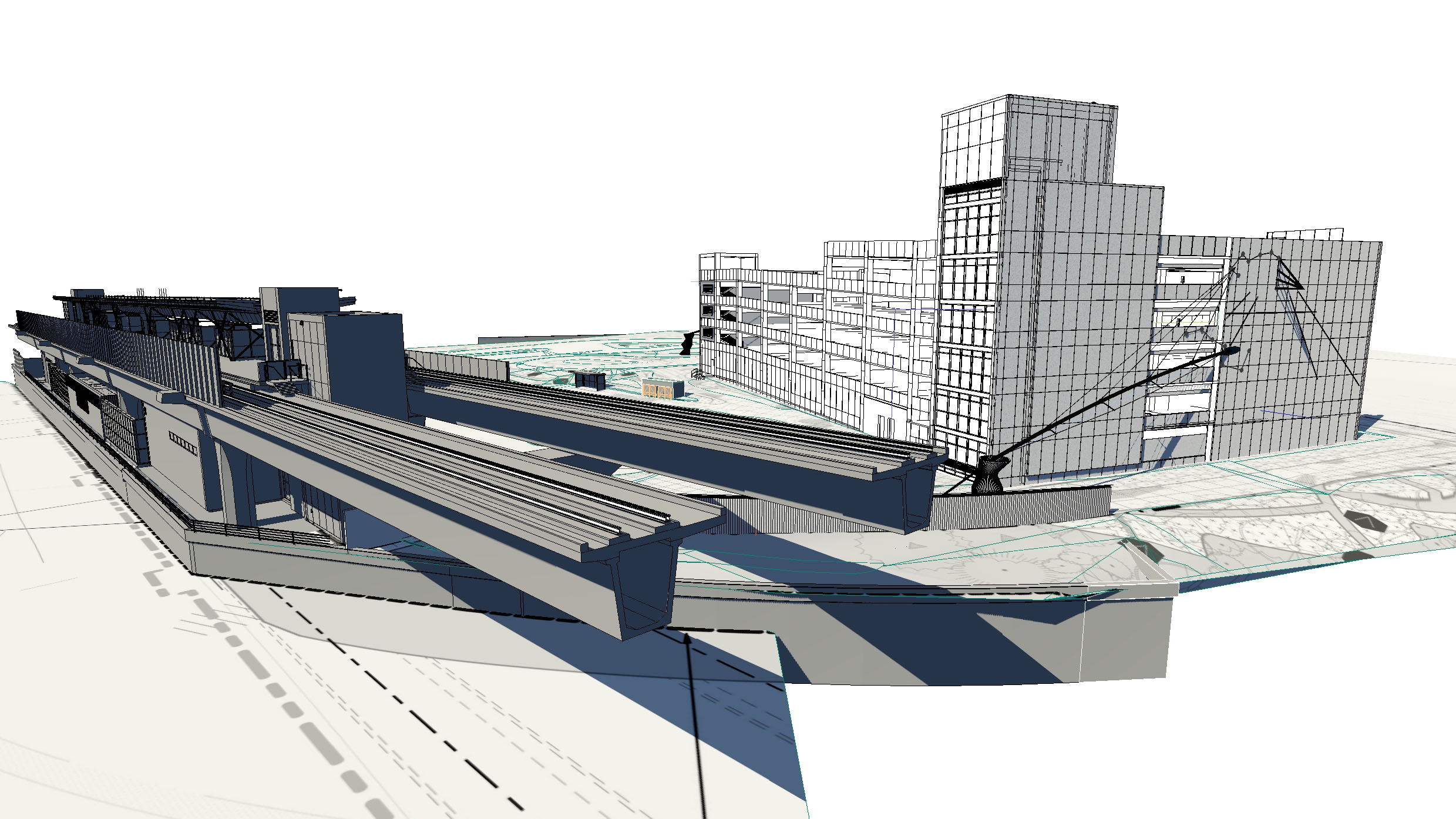
At the crossing of Thornton Creek and the Shoreline South 145th Station, an integrated environmental artwork connects time, travel, and water. The project enlists sculptural elements that include a station time piece and the episodic conveyance of storm water recharging a local watershed.
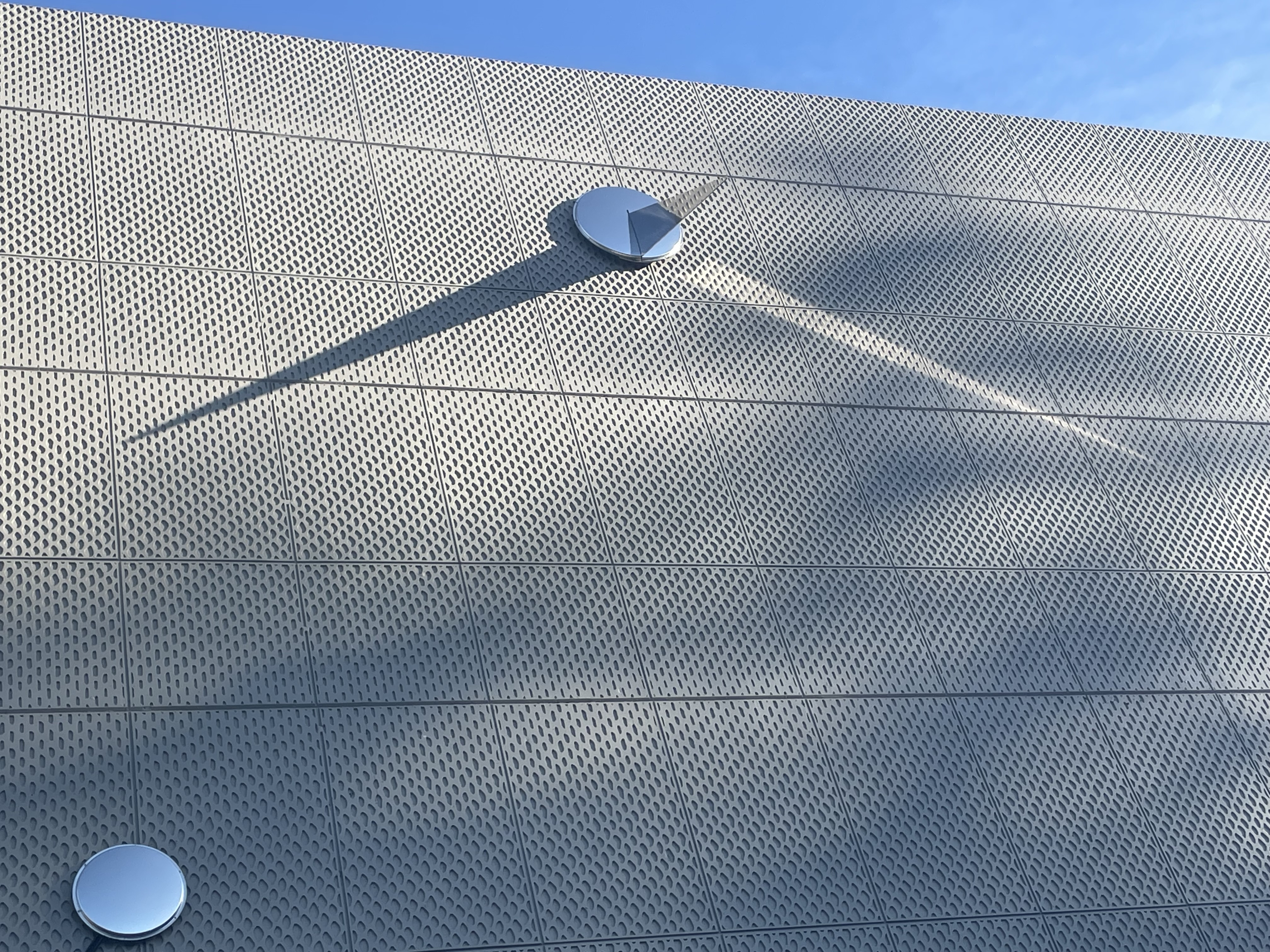
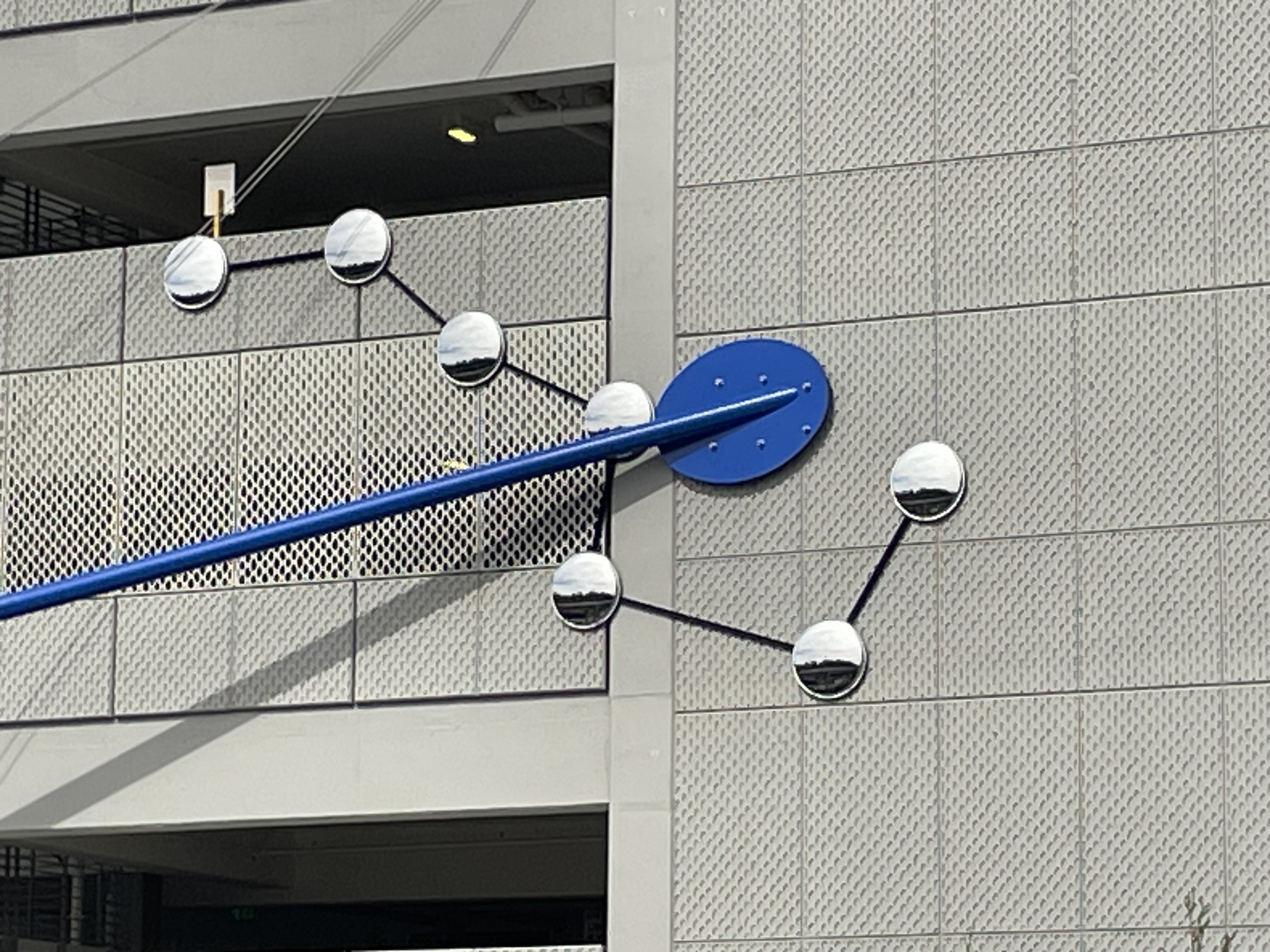
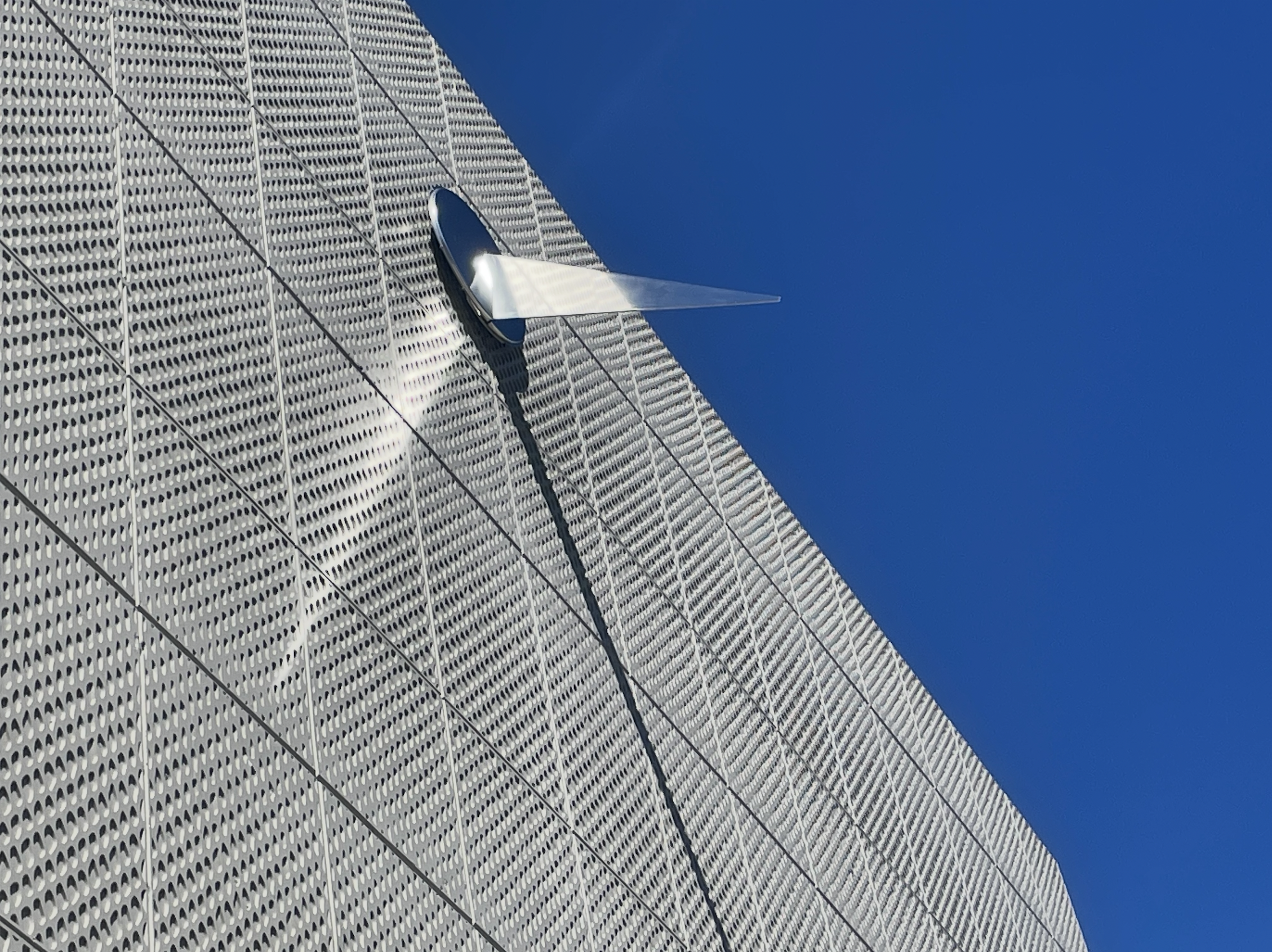
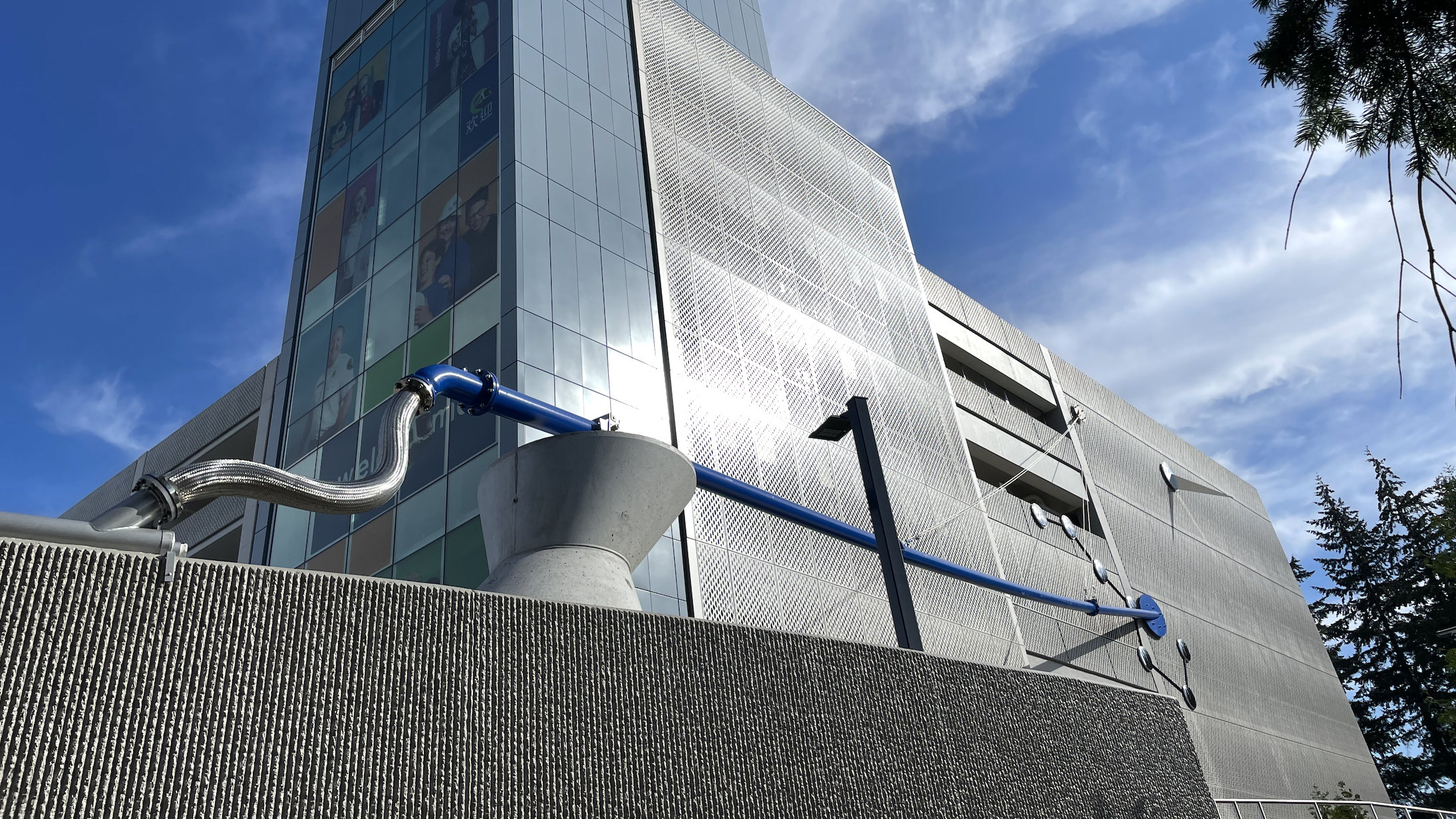
On the large south wall of the station parking structure, and visible to all northbound travelers, a wall frieze encompasses part of the circumpolar constellation including Polaris and the Big Dipper. Polaris is coupled with a unique sundial gnomon with a mirror surface that reflects the movement of the sun as it arcs clockwise across the wall. In turn, the opposite side of the gnomon casts its shadow and moves counterclockwise. At solar high noon, a momentary crossing of the marks occurs when reflected light overtakes the shadow.
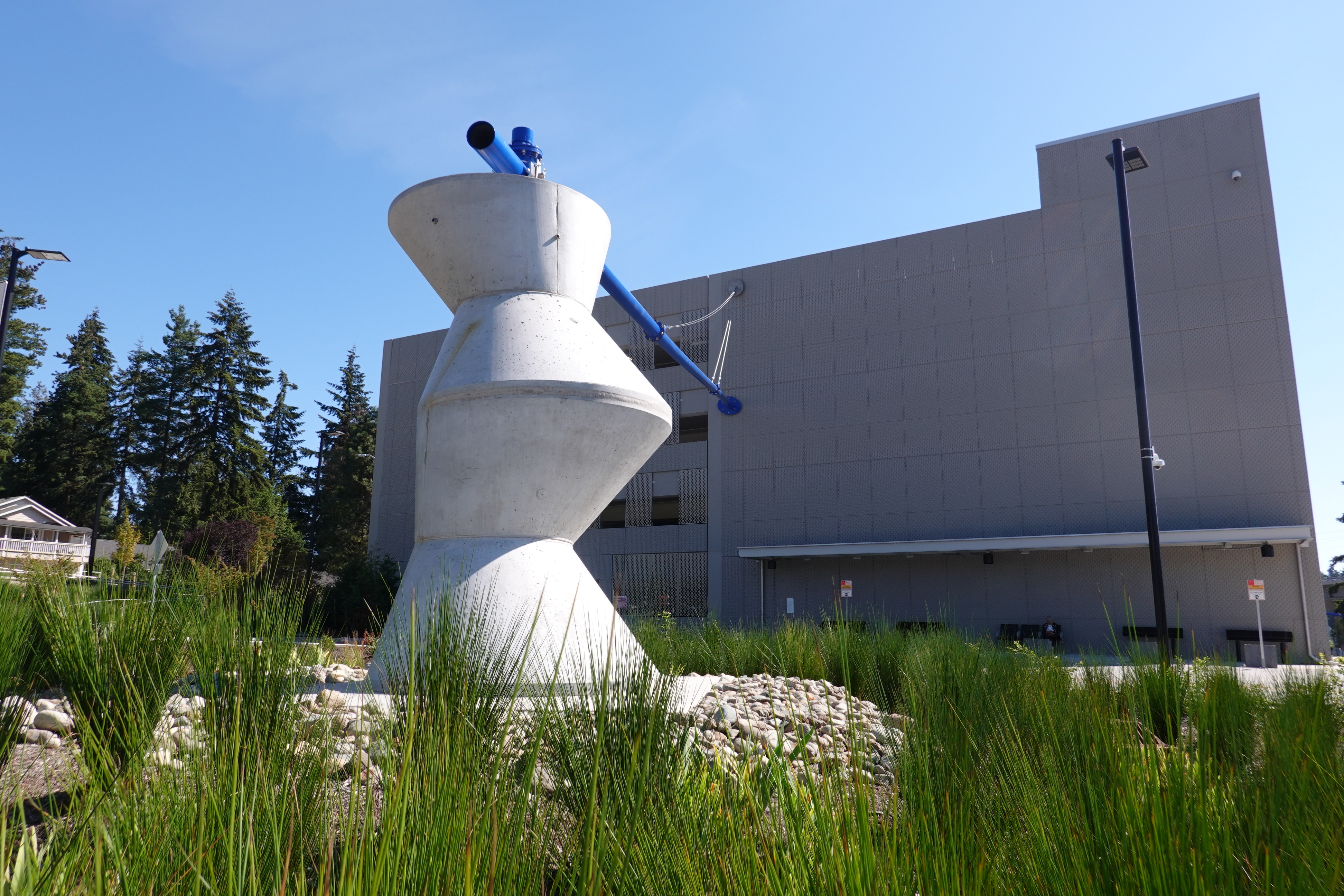
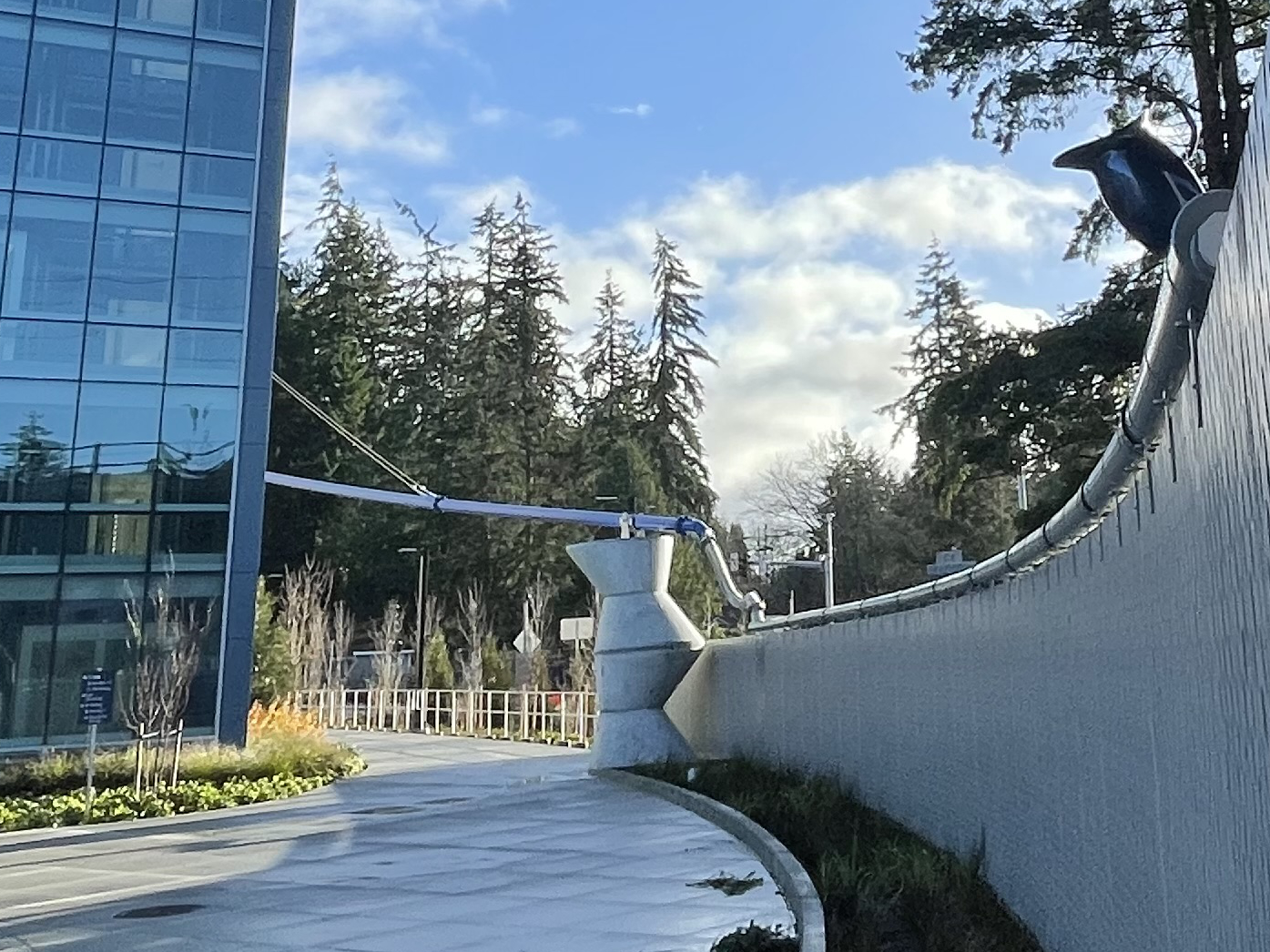
The Big Dipper serves as a locator for the historical aid to navigation, the North Star, as in “follow the drinking gourd.” In the case of the Big Dipper frieze on the south wall, there is a literal and utilitarian reference. The exit of the Catenary Aqueduct pipe from the Big Dipper conveys storm water from the parking structure roof to the awaiting bog landscape detention below.
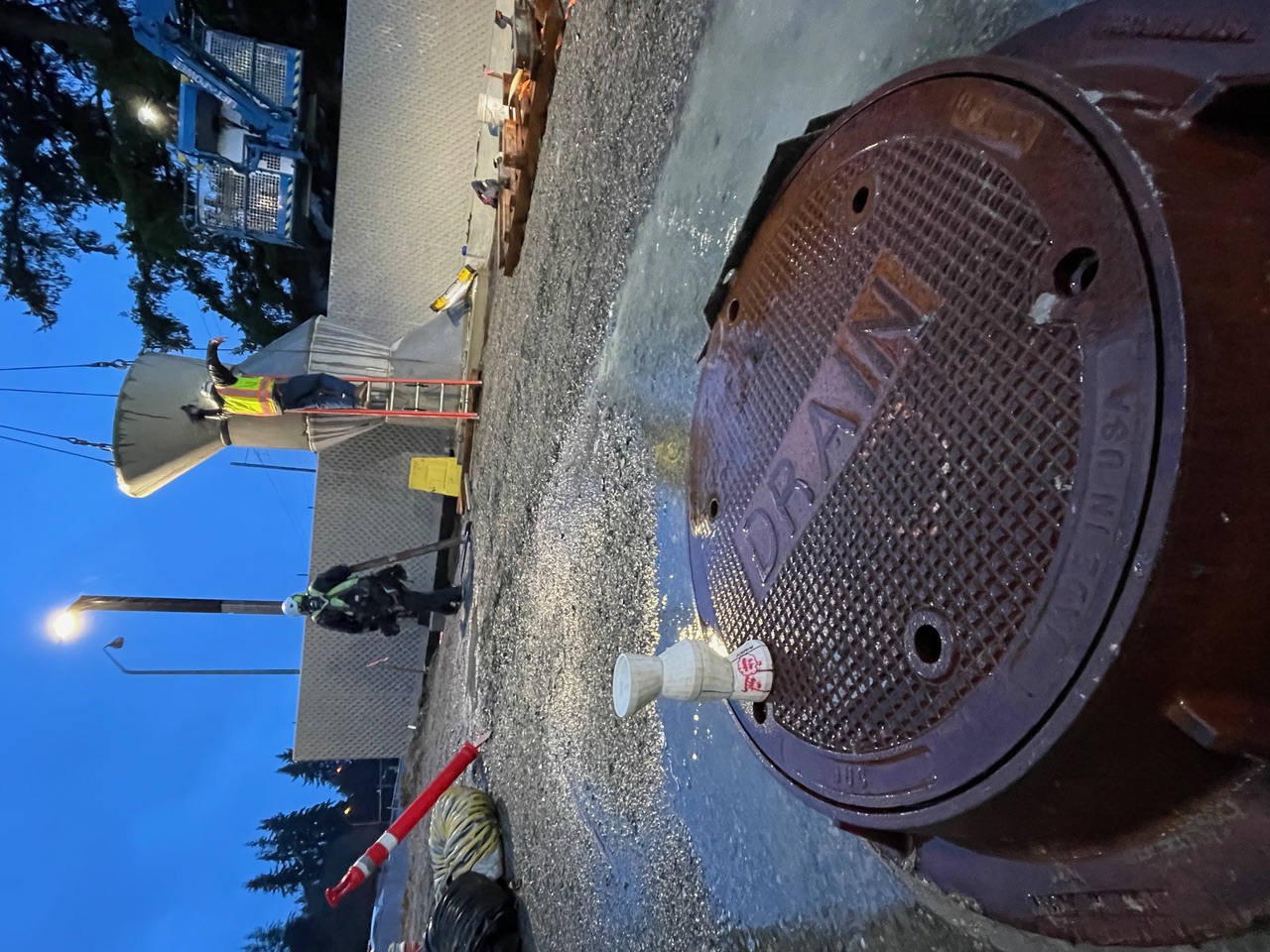
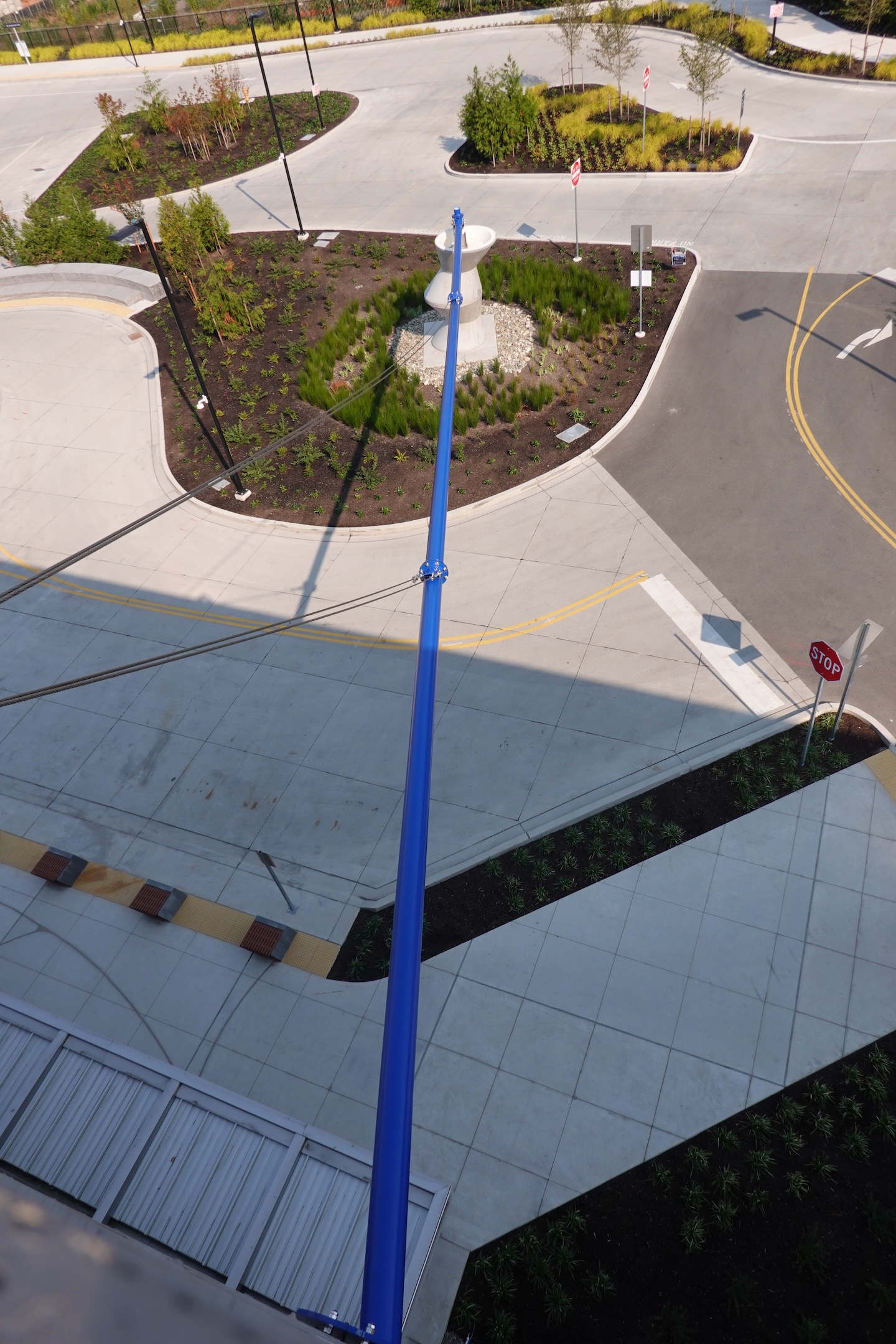
Two 90-foot Catenary Aqueducts transport storm water from the north and south parking structure and each come to rest on an Eccentric Cairn. These cairns are made from stacked eccentric drop inlets and serve as an ode to lost streams and wetlands. Water from the south cairn enters 80-foot-long Weeping Chatter Wall with a stainless-steel water pitcher serving as an overflow valve. Storm water then enters the project drop inlet eventually joining Thornton Creek. The north Eccentric Cairn supports a vertical expression of water pressure determined by the intensity of any given storm event. The water then nurtures a wetland at the base. Overflows enter a project drop inlet eventually reaching Thornton Creek.
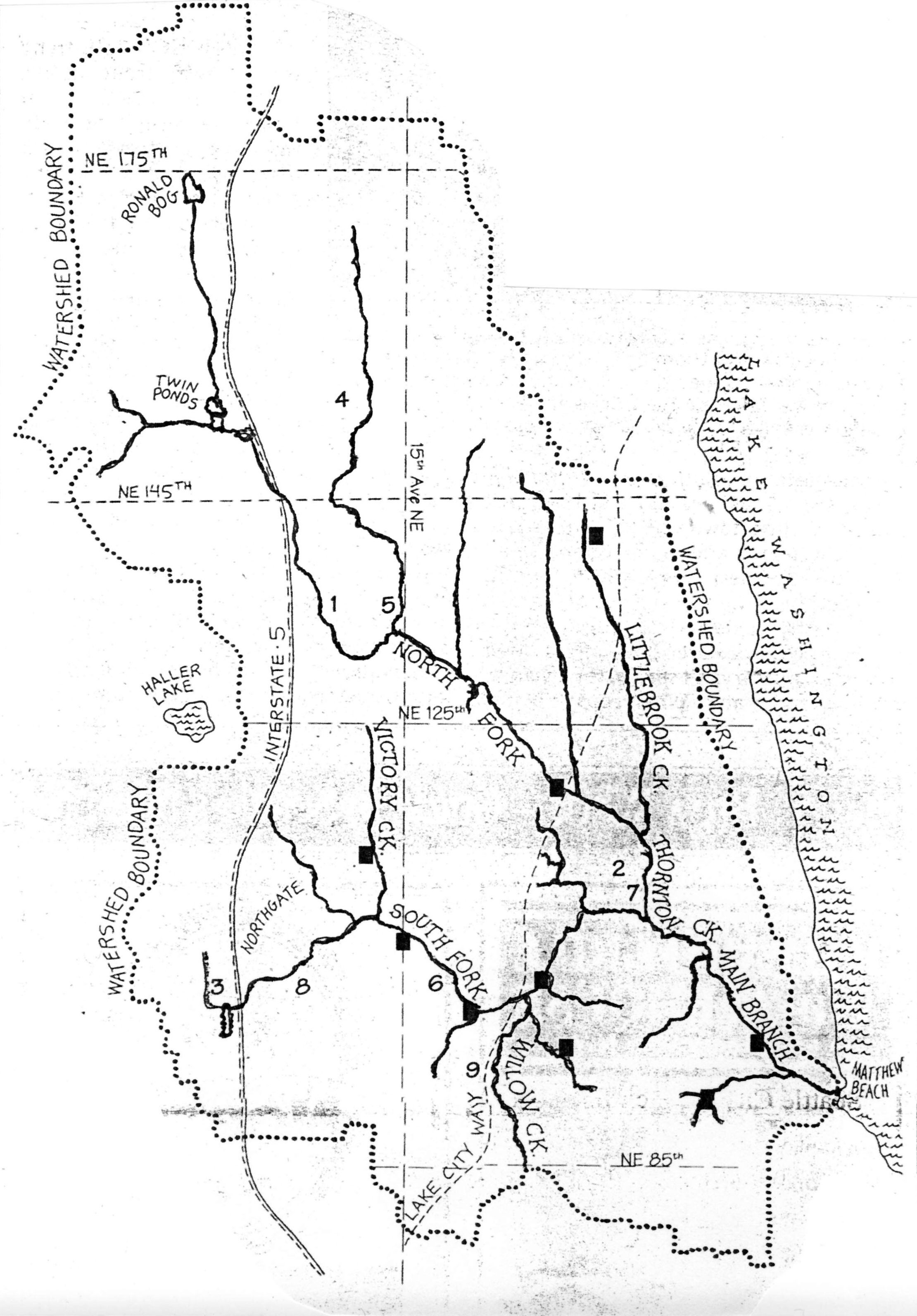
Thornton Creek is a major urban salmon habitat that flows to Lake Washington. The bogs and reconstructed wetland naturally mitigate adverse water quality, enabling the flows to support a sustainable watershed. This environmental artwork joins other Sound Transit efforts in the region to mentor best practices for future dense development along transit corridors.